Scooter Lust two wheels, one love
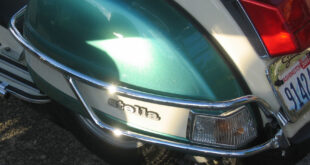
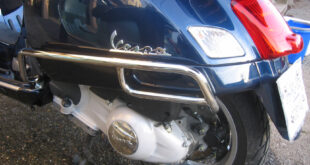
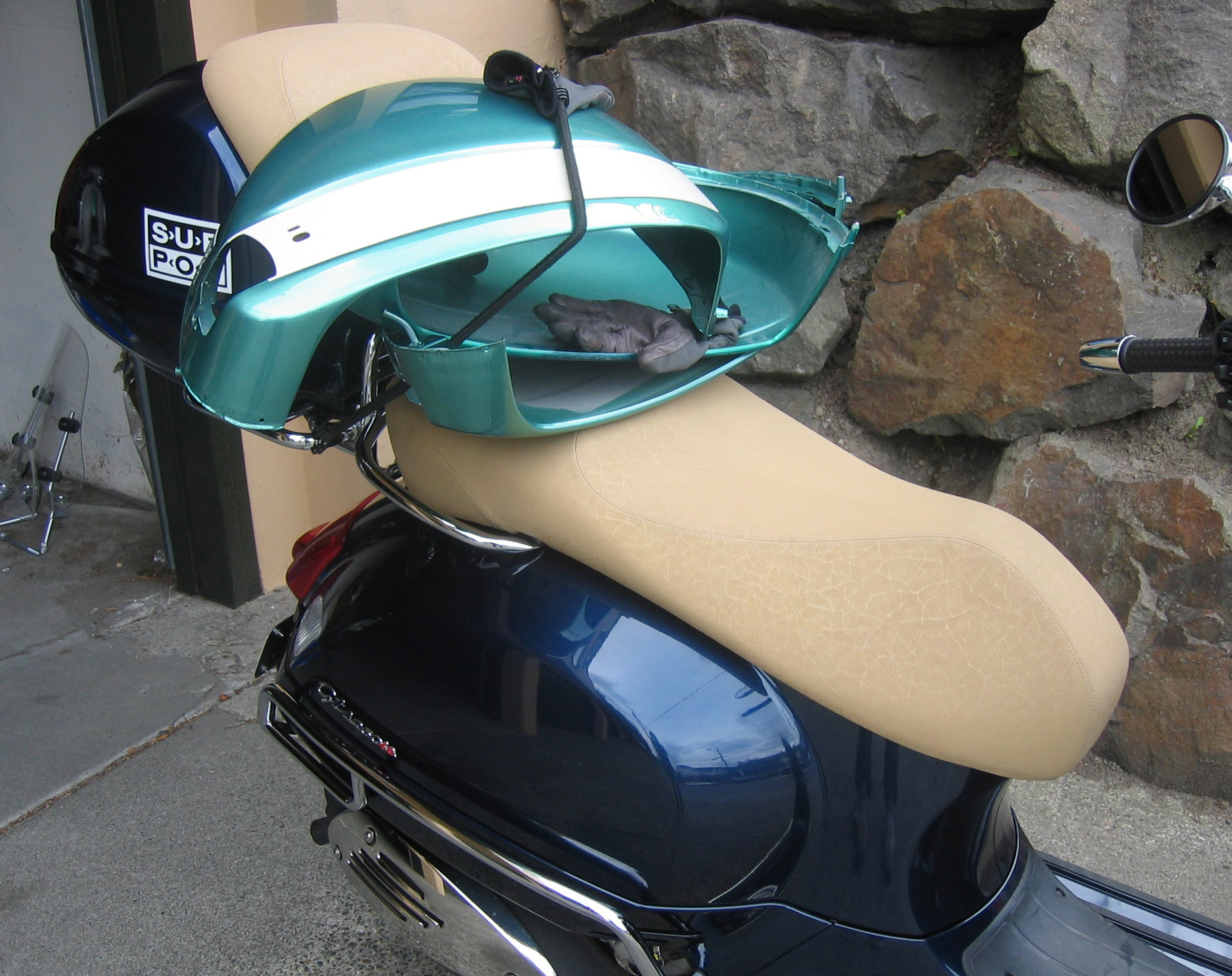 I picked up my finished Stella cowls on Saturday at long last. I strapped them to the Vespa to bring them home and I was slightly nervous transporting them, fearing the curse of the Frankenstella extended even beyond the garage.
I briefly entertained the thought of how darkly apropos it would be to crash right then, totaling the GTS and the freshly-minted Stella cowls in one fell swoop.
Alas, I weathered the 3 miles without incident.
In case you’re just joining us, it might be worthwhile for me to summarize the Frankenstella’s cosmetic challenges. (Summarizing her karmic and mechanical challenges would require more hours than I have to spare.)
My friend was riding the Frankenstella in a parking lot, let up the clutch too quick, popped a wheelie, and then grabbed the throttle, launching the scooter into the air. I watched the Stella bounce along on the asphalt before finally coming to rest on the throttle. The leg shield was dented and the right cowl scratched from the slide.
A few weeks later, I was riding in a group on a gravel road littered with enormous water-filled pot holes. The scooter in front of me stopped short, and I tried to stop short and avoid a pot hole at the same time and down I went. Of course, I dropped the bike on the opposite side of the existing damage, just to balance things out.
Two weeks after that, I brought the scooter to the shop because it was dieseling, and since the shop was closed, I left the Frankentstella parked outside. She was struck by a car, which knocked her down and obliterated what little cosmetic appeal she had left.
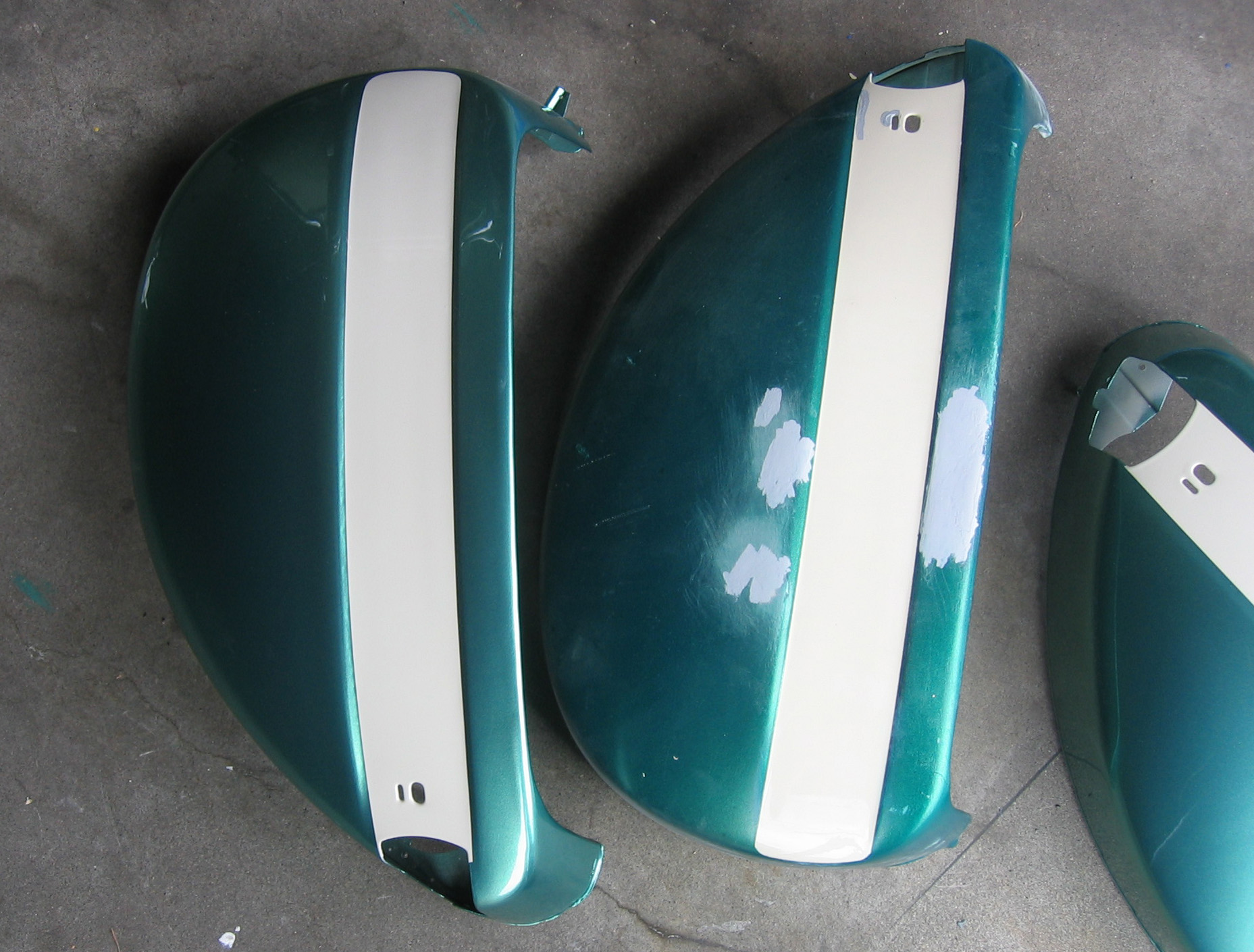
As a result of all this abuse, the Frankenstella’s cowls were banged up but not unsalvageable. After the three unlucky tumbles, the metal was dented, the paint scratched and chipped, and the badges broken off. My primary state of mind when tackling this project was, “how much worse could I make it?”
I consulted the experts. The chapter on Paint and Bodywork in the indispensable How to Restore and Maintain Your Vespa Motorscooter says, “Painting a scooter is generally a procedure best left to professionals.” Hmmph. You’ll get the same advice when coloring your hair, but that never stopped me. I figured the warning was partly a “release from liability” statement (much like Clairol’s), and partly to keep their body shop friends in business.

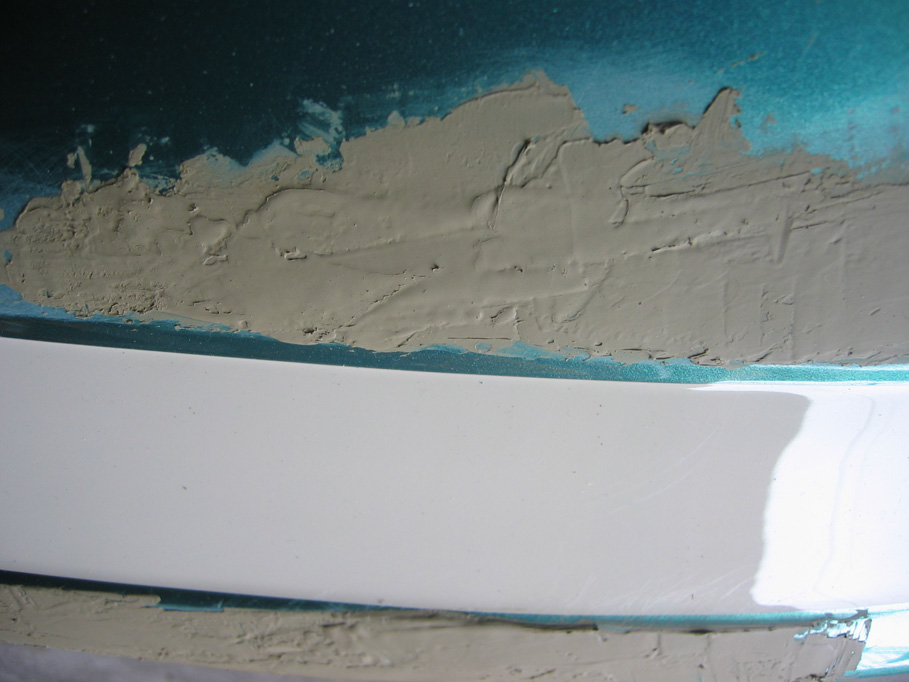
I did fine with the patching, sanding, and priming. The main problem with fixing the cowls myself was matching Celeste’s totally custom metallic green. I made three trips to two different auto supply stores, purchasing various bottles of automotive touch-up paint, and came up just shy of that sparkly mermaid green. I finally found a rattle can of metallic spraypaint at Fred Meyer that looked darn close on the cap, and decided to just go with it. I was frustrated, and broke.
I sprayed the cowls and the color matched from a distance (of about a mile) but up close it was clearly a darker, more pine-y green. Plus, the finish looked like hell. Because I’m not a professional.
Defeated, I ordered two new P-series cowls from Scooterworks because they were on sale.
I did some research to find out who originally painted the Frankenstella, and came up with Russ at Custom Classics Paintworks. He used to be in Lynnwood, where some of my favorite things originate, but has now set up shop in Ravensdale, WA. They’re so old school they don’t even have a web site.
I provided Russ with one of the original cowls, which still had the initial green paint on the inside, and he matched the color and painted the two new cowls for $100 each, including the two-tone stripe. So the whole paint job cost $220 after tax. At first I thought that was a lot of money, but after spending nearly half that on silly little bottles of unmatching touch-up paint and wasting several weekends attempting to make it look passable, I wish I had just gone straight to Russ.
I’m learning that there are tasks we pay professionals to do because they know how and we don’t – and it’s as simple as that. I mean, you wouldn’t perform a root canal on yourself just because you found instructions on the internet, would you?
For some attempts at DIY, the cost of purchasing the necessary tools can exceed having a professional do it for you. In the case of painting the cowls, I don’t plan on doing any further paint work, so it doesn’t make sense for me to buy and set up a spray tent and all the other equipment necessary to do it well. Well being the operative term.
Russ’ finished results. See why I paid him?